


Ken Elias
Now and Then
Based on a talk to CASW, November 2019
Beginning
Between the autumn of 1961 and the summer of 1965, when I studied Medical Laboratory Technology and worked in the Pathology Laboratory at Neath General Hospital, I began to realise an interest in the visual arts. In an attempt to teach myself during free evenings and weekends, I borrowed books from Neath Public Library, and although this elementary introduction to many of the well known works of Van Gogh, Picasso and even Jackson Pollock was made through the aid of the black and white reproductions that illustrated most of these books, I started to achieve some understanding of Modern European and American Painting. I discovered that W.H. Smiths sold a series of 5/- art books called the Fontana Pocket Library of Great Art and quite soon I was building my own small library of coloured reproductions. For 8/6 our local newsagent delivered a monthly copy of Studio International and Huw Wheldon’s Monitor programme on monochrome BBC television offered an occasional introduction to the work of contemporary artists. I quite clearly remember my excitement on seeing Ken Russell’s 1962 Monitor film Pop Goes the Easel which featured the then emerging British Pop Artists, Peter Blake, Derek Boshier, Peter Phillips and Pauline Boty.
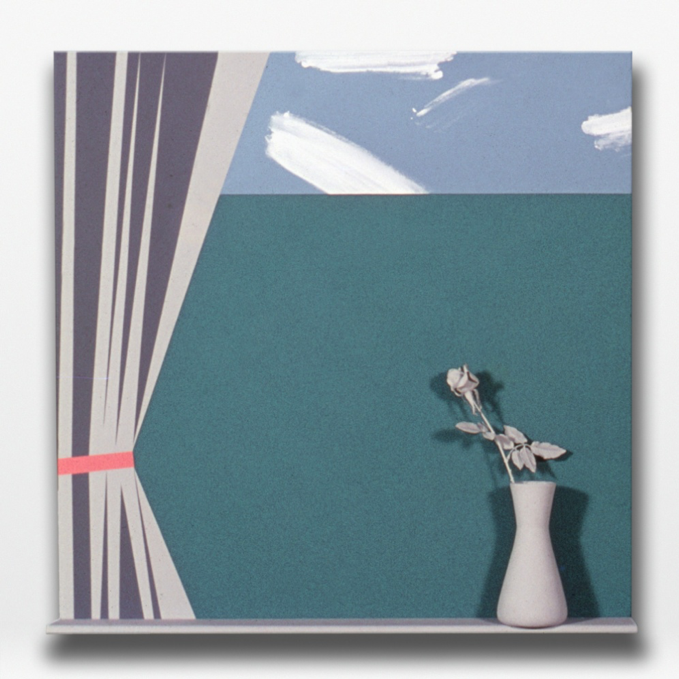
Window Painting, acrylic and collage on canvas, 122x122x13cm, 1969
I started to look for galleries and museums in the South Wales area, where I could find ‘real’ paintings, and more exactly, exhibitions of contemporary painting. I found the Dillwyn Gallery and the Glynn Vivian in Swansea, the Howard Roberts and the National Museum of Wales Galleries in Cardiff, and on short summer holidays to relatives who lived in Edgeware, at the end of the Northern Line, I used the Tube to discover The Tate, The National Gallery, The V&A and The Whitechapel Gallery in London.
With the reckless confidence and enthusiasm of a novice, I was soon revelling in the handling of willow charcoal, oil pastels and tubes of oil paint. Sheets of hard-board, a popular material with many artists at the time, were rapidly covered with large quantities of household paints, sand, plaster or any combination of materials that would facilitate my unashamed pursuit of painting my own Van Gogh or my own Monet.
Through word of mouth, I learned that one of the contemporary artists whose work I had discovered on my gallery visits was teaching a weekly evening class at Gnoll School in Neath, and in September 1963 I joined Will Roberts’ art class. What had previously been a solitary activity, now developed into a more public undertaking. For the first time I encountered encouraging advice and criticism. I grew in confidence, and soon found the determination to apply for a place on the Pre-Diploma course at Cardiff College of Art.
During the 1960s, Cardiff College of Art was at the forefront of art education. Tom Hudson, the Course Director, had devised an innovative introductory course for Art and Design students that owed much to the pedagogical theories that were established at the Bauhaus School of Design during the 1920s and 1930s.
Basic principles were taught in an almost scientific manner, and this laboratory-like approach was well suited to my needs and previous work experience. The course provided me with a firm grounding in the rudiments of Art and Design and established a commitment to hard work that remains with me to this day.
From 1966 to 1969 I studied Fine Art at Newport College of Art and Design and was pleased to meet artists whose work I had discovered on those first visits to galleries in Swansea and Cardiff. Ernie Zobole, John Selway, Jeffrey Steele, Tom Rathmel and others taught on the Fine Art course at Newport, and, during my final year, I was fortunate enough to be allocated a painting area in a studio that was also used as a working space for John Selway and Ernie Zobole. To find myself, on a daily basis, in such closeness to the working process of two serious-minded artists, was remarkably rewarding. Being allowed to witness the ‘dialogue’ that takes place between painter and painting was a formative learning experience – an experience that continues still, to inform my judgement during that unseen struggle that always happens between myself and each new painting.
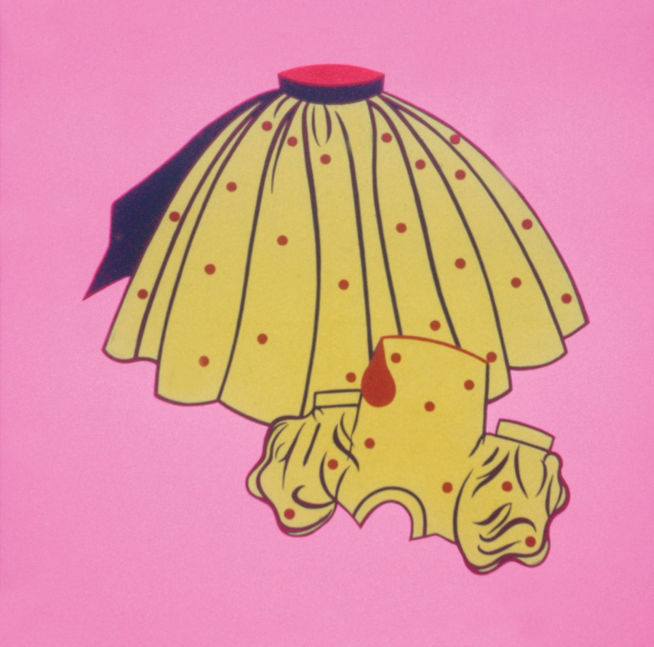
Dress, acrylic on canvas, 122x122cm, 1969
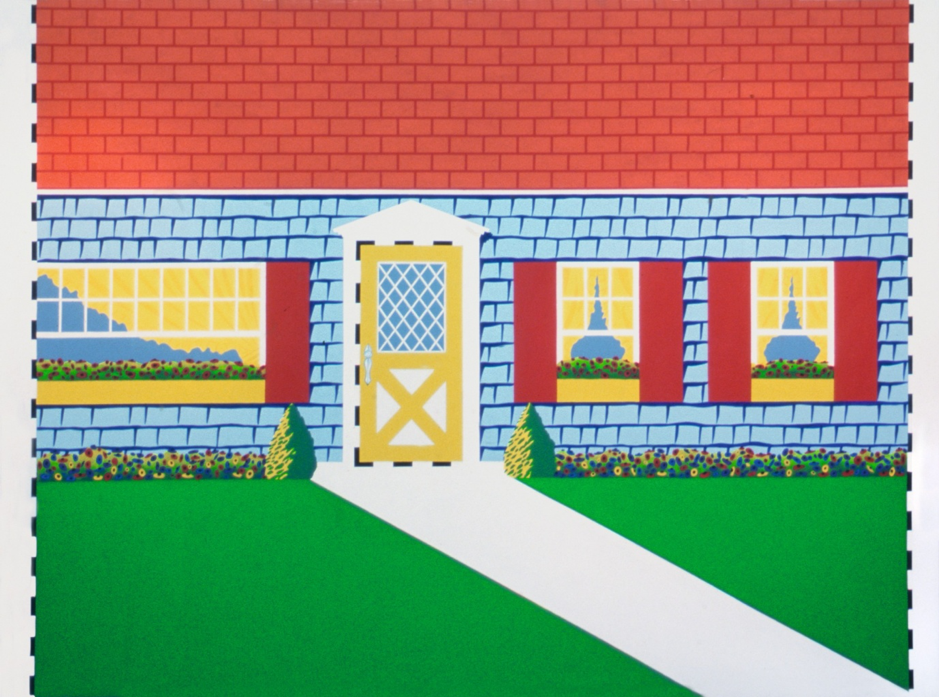
Days are where we live, acrylic on canvas, 181×242.5cm, 1968-69
Photomontage
Due to teaching commitments and restricted studio space in the 1970s I was not able to paint on the large scale that I had been used to in Newport College of Art. Instead I developed a small-scale photomontage technique that I employed to question the human condition, the actual practice of making art, and the commercial exploitation of art and artists.
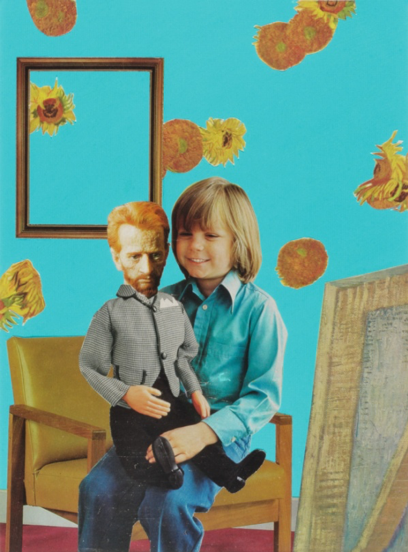
Sunflower Sitting-Room: A Postscript to a Self-Portrait by Vincent Van Gogh
photomontage, 25.8×18.9cm, 1977
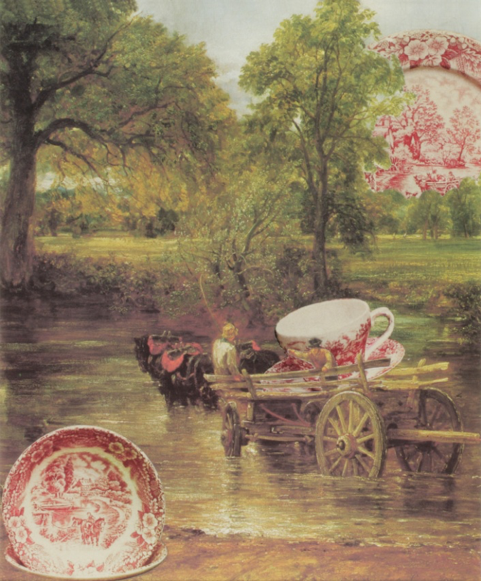
Landscape: Noon, photomontage, 23.3×19.1cm, 1978
MA Fine Art Workshop
During the early 1980s I grew more aware of quite individual painters of much earlier generations. I was attracted to the individuality and independence found in the painting of Stanley Spencer, David Jones, Edward Burra and the writing of Denton Welch. After many years of working primarily with photomontage, collage, and silkscreen printmaking techniques, I returned to painting with acrylic paints on large sheets of paper, and sought to find the means to relate a more personal narrative.
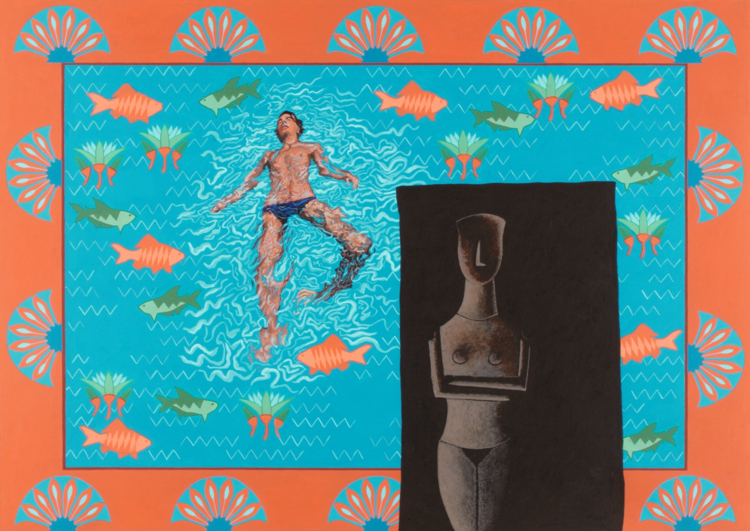
Peter Swimming in the Egyptian Pool, acrylic on paper, 41.5x58cm, 1984-85
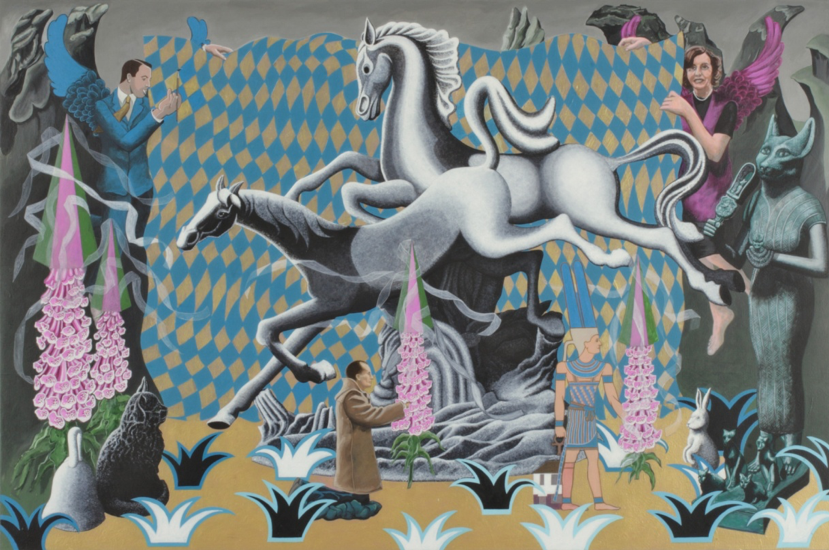
Talisman for a Safe Journey through Howard Gardens
acrylic on paper, 66.5×100.5cm, 1986-87
Visiting Edward Burra at Toulon: a self-portrait with Sue is typical of work from this time. Depicting an imaginary journey into ‘Burraland’ it combines imagery from a painting of my own with imagery taken from Burra’s painting of Toulon painted in 1938. In 1985 John Gingell set up the first MA Fine Art Workshop at Cardiff College of Art, and to test and challenge this change of direction in my work I joined that course.
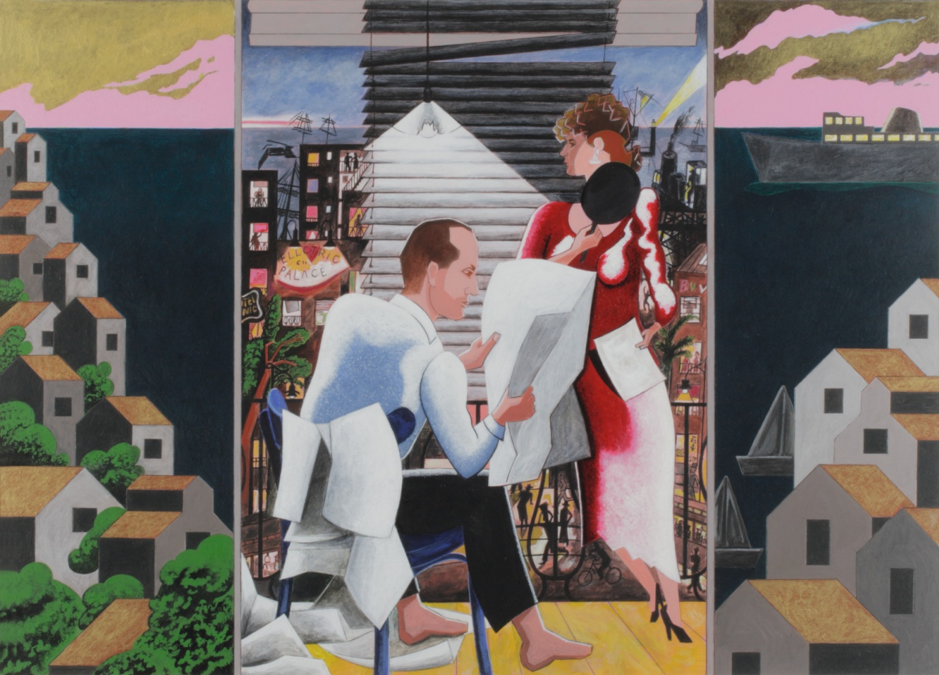
Visiting Edward Burra at Toulon: a self-portrait with Sue
acrylic on paper, 47.5x66cm, 1988-89
Moving House
In the January 1994 I came to live directly opposite to the house where my grandmother and my aunty Katy had lived during the 1950s. Their house backed on to Glynneath Park, where I played as child and where the Miners Welfare Hall housed a cinema. Katy worked as an usherette in the cinema, or the Pictures as it was known, and I lived with my parents at the opposite end of the park.
This was the landscape of my childhood, my ‘Milltir Sgwar’ where, when tired of the physical adventures of the parkland, I found delight in the magic of the Pictures. As an adult, this location still exudes a kind of resonance, and serves repeatedly as a place where paintings have their beginning.
The novelist Shena Mackay said that when thinking of childhood ‘It is as if I am in that airy unsubstantial zone where the birds are flying between the past and the future’. I would like to believe that the paper planes that the paper planes that travel through many of these paintings are capable of making that same journey.

Going Home, Addoldy Road (i), acrylic on paper, 56×71.5cm, 1995
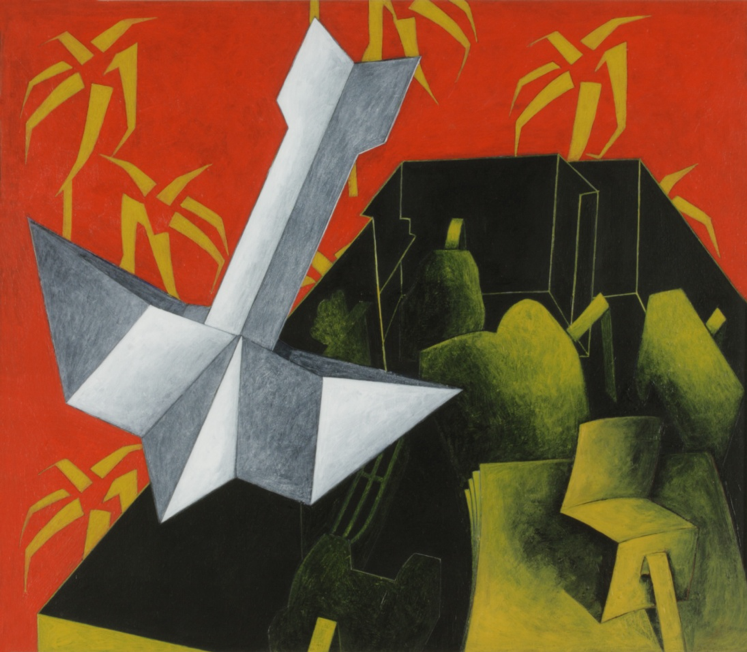
Folding images (i), acrylic on paper, 42.5×48.5cm, 1999
Seeing in the Dark
In the 1936 film Sabotage, directed by Alfred Hitchcock, a husband and wife work and live together in a cinema. From time to time during the course of the film we are shown several characters entering this cinema and walking through the darkened auditorium, where another audience is seen lost in the watching of another film. Passing through a door at the side of the cinema screen they find themselves confronted with the reversed image of the film that is being projected through the screen. They continue to make their way through a short corridor into a small room with a high window. Looking through this window they see another room, one that is simply furnished and where the husband and wife live from day to day.
As a young child in the 1950s I would often spend an afternoon or evening with my Aunty Katy, who worked as an usherette in a local cinema. The cinema occupied the larger part of Glynneath Welfare Hall, a monumental, white Art Deco, temple of a building that was built in the middle of Glynneath Park during the 1930s.
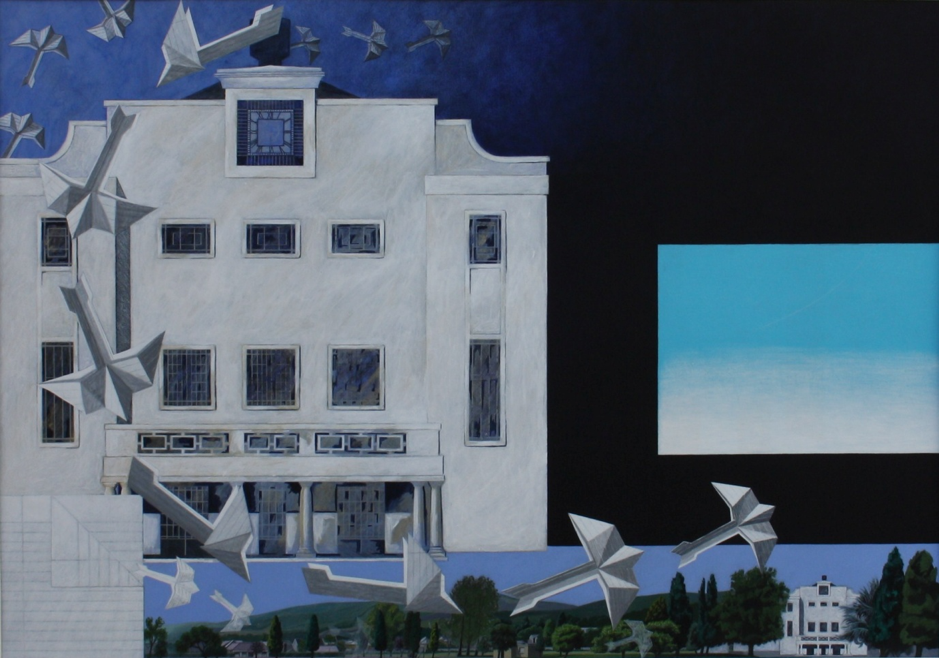
Blue Skies, acrylic on paper, 56x80cm, 1987/2000
At around 6 o’clock on Saturday evenings, Katy and myself would be found, sitting in the first two seats of the back row of the circle, waiting to receive a signal of two flashes of torchlight from the stalls. When given the signal, which told us that it was time for Katy to take her tea break, we walked together, down from the circle through an audience sitting in the darkened stalls, and after pulling back a heavy red velvet curtain that hung near the cinema screen, we climbed down a steep wooden staircase, that led us to a small kitchen. During summer months, warm sunshine blazed through the windows, as we sat in that domestic arrangement, eating sandwiches, drinking tea and listening to the soundtrack of the film and the often louder reaction of the audience. Resembling the cast of Alfred Hitchcock’s Sabotage, we gazed out of the kitchen windows at other children playing and other adults taking a stroll through the last sunshine of the day.
As Ian Breakwell has written: ‘There is something about the cinema that encourages, right there in the picture house, thoughts, feelings and behaviour in its patrons by turns enigmatic, terrifying, erotic, sad, hilarious and poetic, often triggered by uncanny interplay between screen image and real time events in the auditorium and the world beyond the muffled doors. “Alone in a crowd” is never so intense as at the movies, and never so open to sudden dislocation. It is the complex play between me, you, them, the cinema building and the world outside that enables us on occasion, to experience reality more completely, and as in dreams, to see in the dark.’
My own early experience of ‘seeing in the dark’ was a formative experience – one that, even today, still holds an influence, and provides a space where paintings can happen.

Now
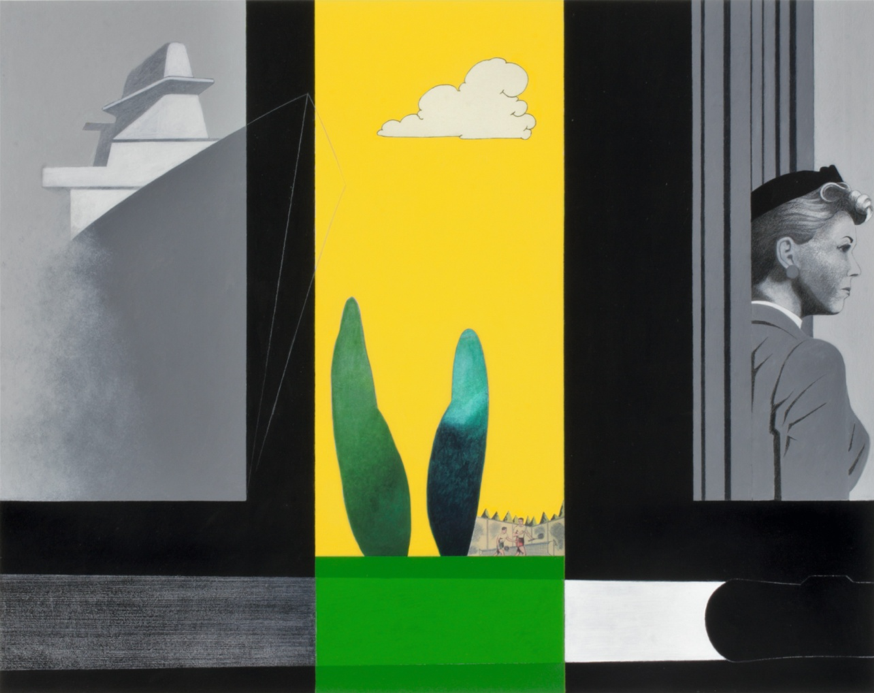
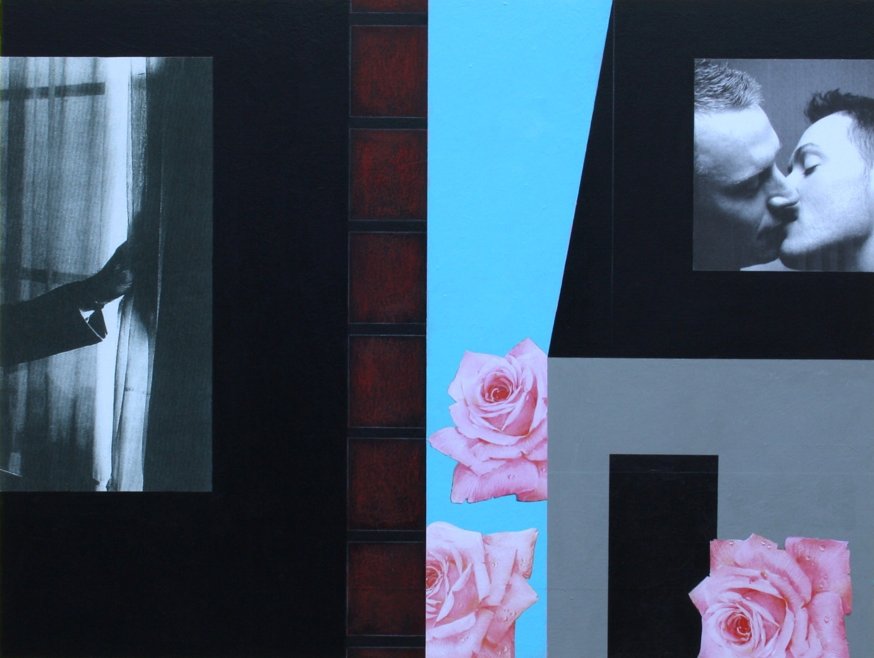
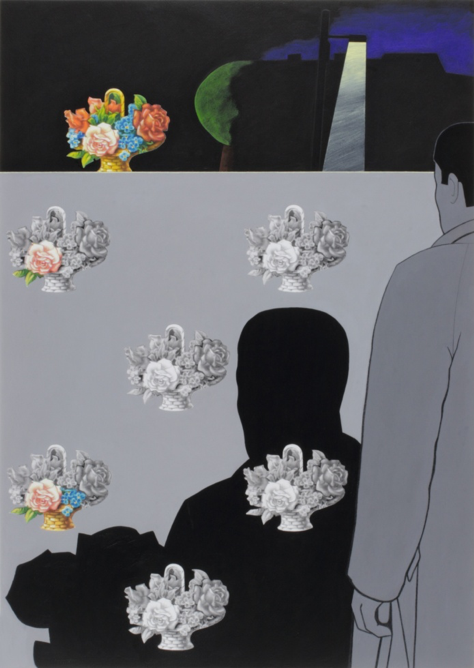
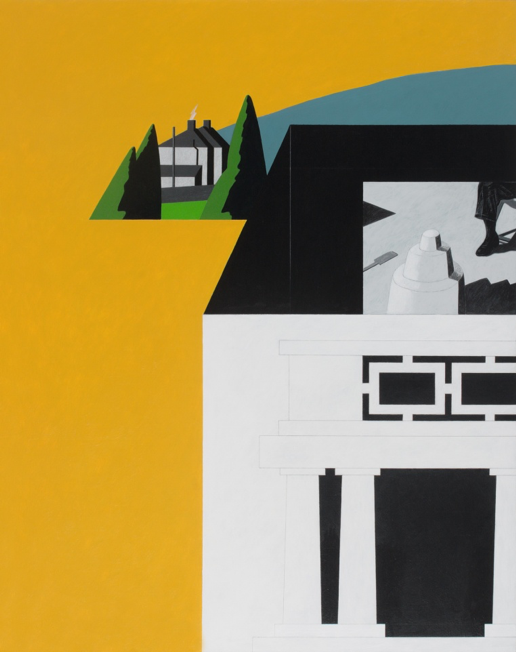
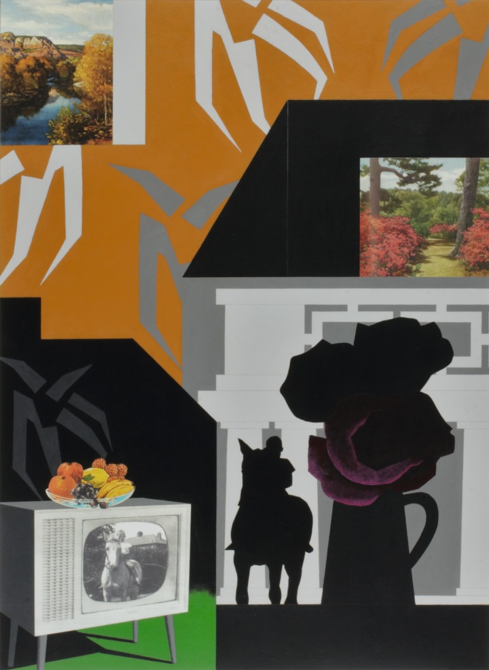
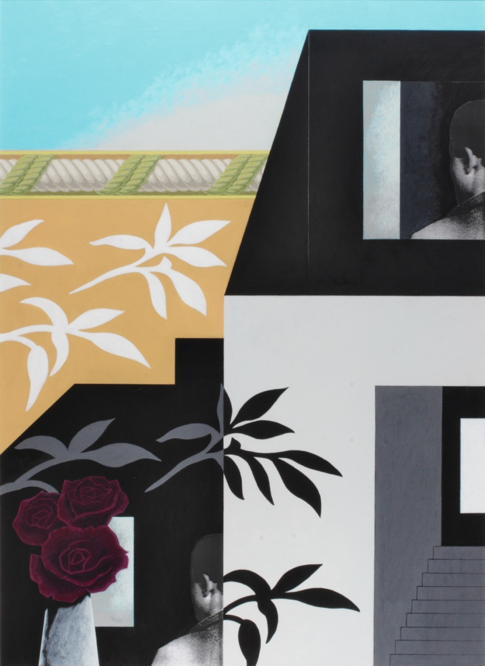
From those earliest student days my paintings have always had a story to tell. Whether expressed through the medium of photomontage, collage, print, paint on paper or paint on canvas, there has always been a narrative. The prominence of that narrative continues in today’s paintings and those different methods of working are now employed separately or together in accordance to the demands of each subject. This mixed language working method is further employed in the subject matter itself. New paintings may address the human condition, while others may approach a personal issue, and it is feasible that subjects are capable of being local, universal, imagined, observed or remembered.
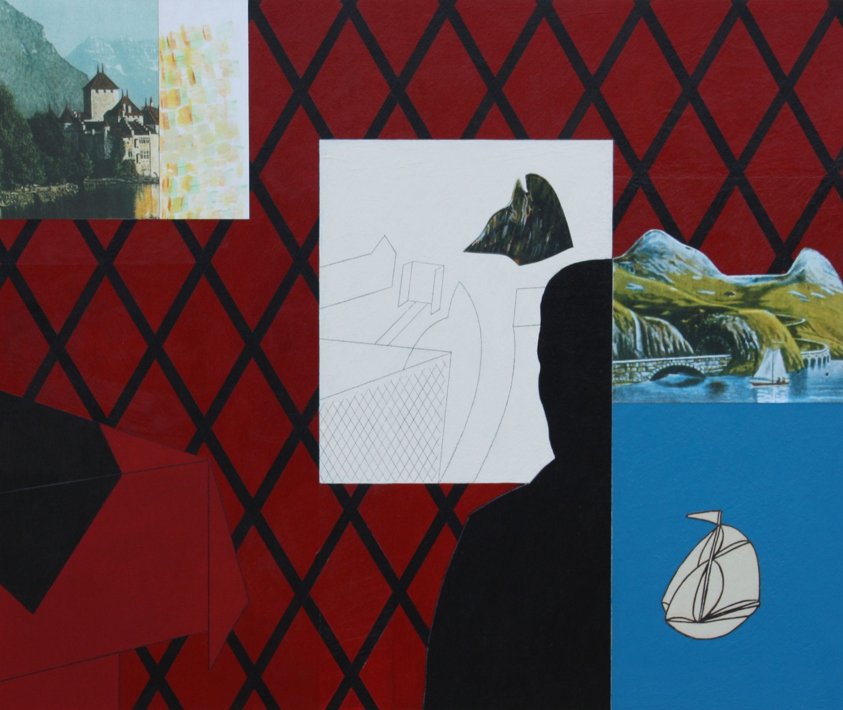
About 3 Paintings, acrylic on paper with mixed media, 94x103cm, 2014
Background note
Ken Elias lives in Glynneath, South Wales.
Ken Elias Thin Partitions is published by Seren Books www.seren-books.com It includes 104 illustrations of his work and essays by Dai Smith, Ceri Thomas, David Briers, Anne Price-Owen, and Hugh Adams. Examples of his work may also be found on the following websites:
https://en.wikipedia.org>wiki>Ken_Elias
© the artist